

I share practical perspectives on reinvention, innovation, AI and leadership, helping organisations navigate global change, unlock growth and create sustainable competitive advantage in a changing economy.
Throughout my career, I have been invited to speak in many different settings — conferences, executive workshops, leadership offsites, client events and international programmes. What organisations usually ask for is not motivation alone. They want perspective grounded in real experience: insight that connects strategy with reality, innovation with commercial opportunity, and leadership with execution.
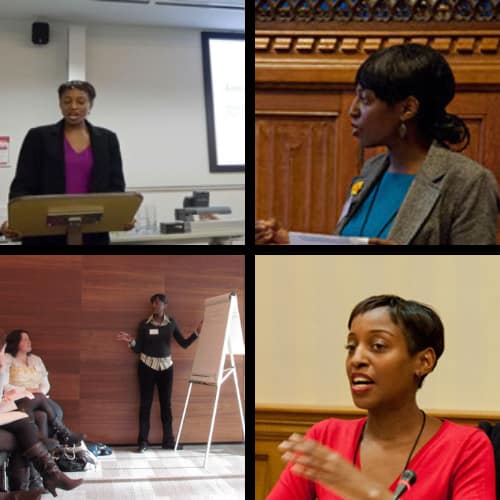
After more than 25 years working across consulting, engineering, property, ventures and advisory roles in more than 30 cities worldwide, I have seen how organisations grow, adapt and reinvent themselves. I have also seen where strategies fail to translate into action.
For me, effective leadership in the global economy is increasingly about one thing: the ability to respond intelligently to change without losing sight of the organisation’s purpose, people and commercial objectives.
Leading Reinvention Through Change
Reinvention is no longer something organisations consider only when a business model is under pressure. Markets, technologies, customer expectations, geopolitics and workforce dynamics are changing continuously.
My Leading Through Change: Resilience, Reinvention and Sustainable Growth sessions explore what it takes to lead when established assumptions are being challenged.
I focus on the practical realities of change: how leaders make decisions with incomplete information, maintain momentum when certainty is unavailable, bring people with them and identify where an organisation needs to adapt rather than simply do more of what it has always done.
I believe resilience is not about resisting change. It is about developing the capacity to respond, learn and move forward.
For founders, executives and investors, that distinction matters. Sustainable growth increasingly depends on knowing when to optimise the existing model and when to reinvent it.
AI, Innovation and the Future of Leadership
Artificial intelligence has moved rapidly from a technology conversation into a boardroom, workforce and competitive strategy issue.
My AI, Innovation and the Future of Business Leadership sessions examine AI from a leadership and commercial perspective.
I am particularly interested in the gap between adopting technology and actually creating value from it.
AI can improve productivity, accelerate analysis, support decision-making and create new products and services. But technology alone does not create competitive advantage. Leaders need to understand where AI can genuinely change the economics or effectiveness of their organisation — and where human judgement remains essential.
The leadership challenge is therefore broader than asking, “How can we use AI?”
It is asking:
What should we rethink because AI has changed what is possible?
That question opens a much more strategic conversation around operating models, capability, innovation, talent, customer experience and future growth.
I also explore the implications for the workforce. As automation and AI reshape tasks and roles, organisations will need to place greater emphasis on adaptability, critical thinking, creativity, commercial judgement and continuous learning.
The future of work will not simply be about humans versus technology. It will increasingly be about how effectively organisations combine human capability with intelligent technology.
Innovation Beyond the Idea
I have always viewed innovation as more than generating ideas.
The commercial value of innovation comes from turning insight into something that creates measurable value — whether that means a new business model, a better customer proposition, a more efficient operating model, a new market opportunity or an entirely different way of solving a problem.
My experience working with founders, investors and leadership teams has reinforced the importance of connecting innovation to strategy.
An organisation can have hundreds of ideas and still fail to innovate effectively if it lacks the leadership, resources, partnerships or appetite to execute them.
I therefore approach innovation through a strategic lens:
What opportunity are we trying to capture? What needs to change? What are we prepared to test? And what would make the innovation commercially meaningful?
This is particularly important for established organisations, where legacy systems, processes and assumptions can become barriers to experimentation.
Innovation often requires leaders to challenge their own success — and to recognise that what made an organisation successful yesterday may not be what makes it competitive tomorrow.
Leading in a Global Economy
Global growth creates opportunities, but it also creates complexity.
My Cross-Border Growth: From Local Strategy to Global Impact sessions explore the strategic considerations involved in taking businesses, propositions and partnerships into new markets.
Having worked internationally across multiple sectors and cities, I have experienced first-hand how different markets can challenge assumptions about customers, partnerships, communication, commercial models and leadership.
International expansion requires more than identifying an attractive market.
It requires understanding the ecosystem around that market.
Who are the right partners? How does the customer make decisions? What cultural or regulatory factors affect the proposition? What should remain consistent globally, and what needs to be localised?
I encourage leaders to look beyond the traditional concept of international expansion and consider global growth as an exercise in strategic adaptability.
The strongest organisations can maintain a clear strategic identity while adapting intelligently to different markets.
Leadership That Creates Strategic Advantage
Leadership today requires a combination of strategic clarity, commercial awareness and adaptability.
Leaders are operating amid technological disruption, economic uncertainty, changing workforce expectations and increasingly interconnected markets. They are expected to make decisions quickly while understanding consequences that may unfold over years.
My approach to leadership is grounded in practical experience rather than leadership theory alone.
I speak about the behaviours and decisions that determine whether strategy actually moves through an organisation.
That includes building trust, communicating change, creating accountability, developing partnerships and giving people enough clarity to act while retaining the flexibility to respond when circumstances change.
For me, leadership is ultimately about creating the conditions in which people, ideas and capital can move towards a clearly defined opportunity.
Reinvention, Entrepreneurship and Second-Stage Growth
Reinvention also has a human dimension.
I am particularly interested in the value of experience, second-stage entrepreneurship and the opportunities that emerge when people challenge assumptions about what their next chapter should look like.
My novel, Nifty, explores this through the story of a woman in her 50s who launches a sustainable fashion venture with her best friend.
Although it is fiction, the themes are grounded in real conversations around confidence, identity, entrepreneurship, risk, reinvention and starting again.
The story can create a different entry point into conversations about later-career entrepreneurship, inclusive leadership and the commercial value of diverse experience.
More about Nifty is available at nifty.lenabenjamin.com/novel.
From Speaking to Strategic Action
My speaking work sits alongside my work as a fractional growth advisor and strategic partner to founders, investors and leadership teams.
That combination matters because I do not approach speaking as something separate from business.
The best keynote or workshop should create a useful shift in thinking.
It should challenge an assumption, introduce a practical framework, open a new strategic question or give an audience a different way of looking at an opportunity.
That might mean helping an executive team think differently about AI adoption, challenging a leadership team to consider reinvention, helping founders identify opportunities for international growth, or creating a conversation around innovation and future capability.
Earlier in my career, I created the Inspiring Women in the 21st Century events at the Houses of Parliament, followed by the Empowering Women Summit at the Chesterfield Mayfair Hotel and the Royal Institution. Those experiences reinforced my belief that the most valuable business conversations happen when strategy, experience and storytelling come together.
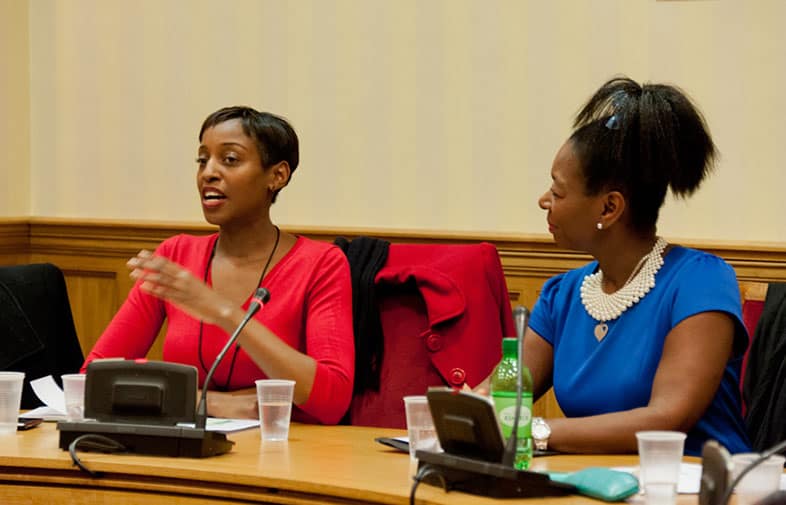
Today, alongside my speaking work, I act as a fractional growth advisor and strategic partner to founders, investors and leadership teams. I also lead initiatives such as the Empower Business Legacy Club, focused on collaboration, second-stage growth and long-term value creation. These experiences form the foundation of the sessions I deliver, whether the audience is corporate, entrepreneurial or investor-led.
Speaking engagements are available in-person, hybrid or virtual, across Europe and internationally, and work particularly well for conferences, leadership programmes, innovation events, executive workshops and client experiences.
If you would like to book me as a keynote speaker, panel contributor or workshop facilitator, details are available here: https://lenabenjamin.com/bookspeaker